
ASSET LEDGER
The Night Huntress Asset Audit: A 98-File Canon Library and the "Highest Version Wins" Rule
A 98-file canon library, a highest-version rule, and byte-for-byte archive verification.

FACT-CHECK RECORD
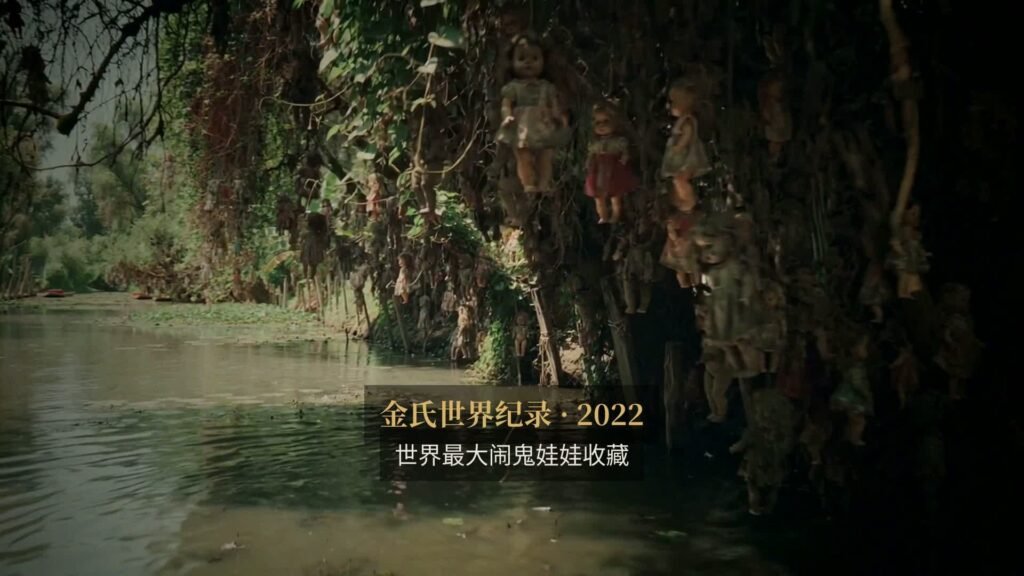
Our own fact-check gate stopped two shots. Here is what replaced them.
Make fact-checked AI video long enough and you will meet this shot: the storyboard is written, the prompt is ready, but the shot cannot be filmed truthfully — the subject has no credible photograph, the claim has no solid source, and generating it anyway means passing off a fabricated image as fact. Veiled Lore Atlas’s Doll Island V2 had two such shots blocked (BLOCKED status) by our own fact-check gate before production. Both shipped via workarounds. Here is the full record: the rulings, the workaround toolkit, and the swap accident the replacements caused later.
When a shot gets blocked, the right response is not to tune the prompt until it slips through — it’s to admit the shot hasn’t earned a photoreal depiction, and downgrade the presentation: text cards, post-production overlays, symbolic imagery, the visual language of absence, downgraded wording. Audiences don’t leave over a missing close-up. They leave — permanently — when they catch you fabricating.
To be precise: no platform’s content moderation rejected these shots. They were stopped by our own Gate 1 — before production, every claim in a video is graded on the factual risk list, and anything marked ⛔ pending-ruling may not be decided by the production itself; it waits for a ruling. Doll Island V2’s list had six items (R1–R6); two were blocked:
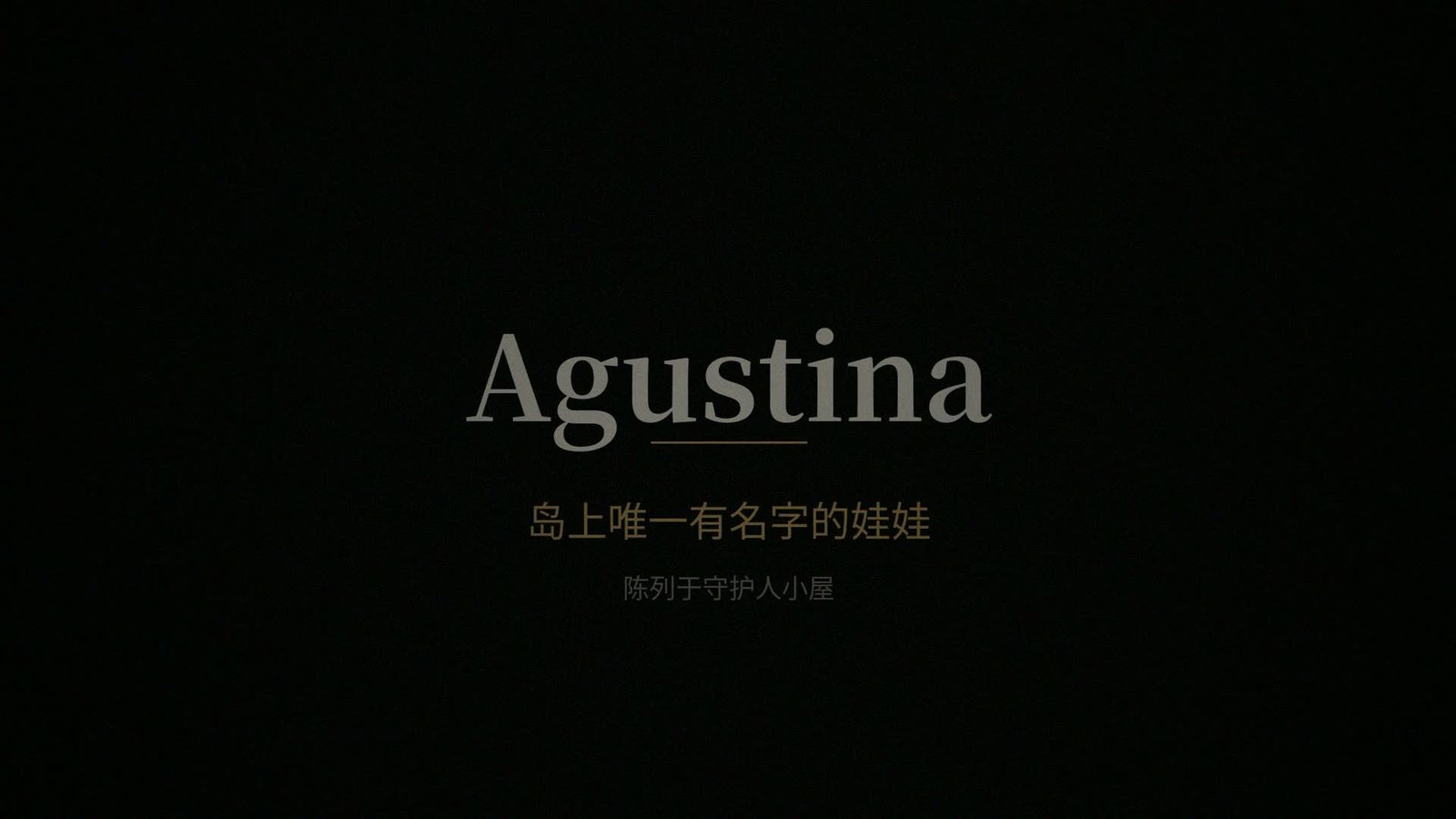
R3 — the Agustina close-up (shot F3). The narration says “the island’s only named doll is called Agustina” — the name is a multiply-reported fact. But what this doll looks like has no publicly credible photograph to reconstruct from. Generate an arbitrary doll close-up, caption it with her name, and that is a false identification: viewers would believe they are looking at Agustina herself.
R1 — the 1943 filming claim (shot G1). English Wikipedia describes the island as one of the filming locations of Emilio Fernández’s María Candelaria (1943), but across 15 sources we could not establish the distinction between “filmed in the Xochimilco region” and “filmed on Doll Island itself”. The narration’s line, meanwhile, was declarative: “This island was on the silver screen back in 1943.” If the truth is region-level, that sentence is a factual mislead.
The two shots share one trait: the problem was never that the image couldn’t be made. It’s that the evidence couldn’t carry the image.
On 2026-10-12 the user ruled on both items:
| Shot | Original design | Ruling | Replacement presentation |
|---|---|---|---|
| F3 Agustina | A doll close-up with a name plate | R3, option (b) | A programmatic text card: state “the island’s only named doll, Agustina” — no close-up shown, no doll identified |
| G1 1943 filming | A black-and-white period reenactment visual | R1, option (c) | A text card with the claim downgraded to region level: “the Xochimilco region was once a film location” — no claim of on-island filming, no real film footage |
The programmatic text card is the key tool here: it is not a generated image but a typeset information card (text, layout and a slow push-in all produced in code). Viewers can tell at a glance that this is *explanation*, not *footage* — the information lands in full, while the space for fabrication drops to zero. F3’s card even uses a slow zoompan push so a static card doesn’t stall the film.
The same production used four more downgraded presentations, each blocking a different kind of fabrication:
| Shot | Claim | Presentation | Fabrication blocked |
|---|---|---|---|
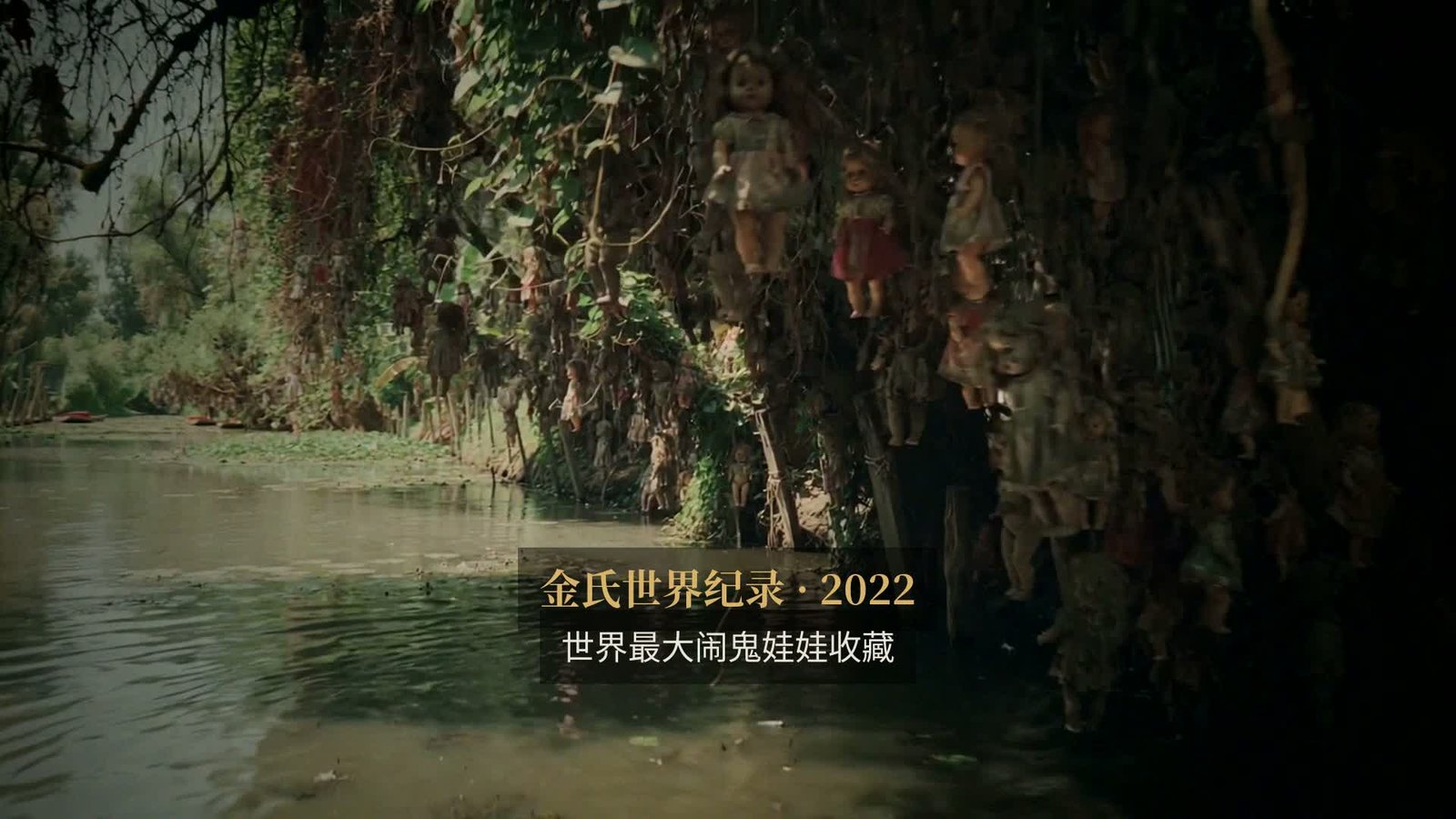
| F4 The Guinness record | The 2022 “world’s largest haunted doll collection” record | Island vista + post-production text overlay (name + year) | Generating a fake award certificate |
| B2 The drowned-girl legend | The guardian reportedly found a drowned girl in the 1950s (oral account) | A dreamlike symbolic visual — water surface and floating dolls, absolutely no body or human figure | Dressing an oral legend up as historical reenactment footage |
| D segment The evidence gap | “No record proves the girl existed” | Blank files, blurred screens, an empty chair — a visual language of absence | Forging historical documents or photographs |
| E segment The 2001 death | The guardian died in 2001; two accounts of the cause coexist | An empty canal, fallen leaves, an empty chair, a water lantern; no body, no fall, the year overlaid in post | Letting imagery endorse either account of the death |
| G2 The Lady Gaga video | The 2025 music video shot secretly on the island for three days | Night shoot lighting and crew silhouettes as implication | Showing the artist, recreating the video, or using her music (rights and misleading) |
This table is the part of the article most worth keeping: the workaround is not one tool, it’s a kit. Each entry maps to a principle — don’t identify (F3), don’t overclaim (G1), don’t forge (F4, D segment), don’t reenact (B2, E segment), don’t appropriate (G2). Generation tools can make almost anything; discipline is deciding, exactly where they can, what not to make.
The story doesn’t end there. After V2 passed its second-round acceptance (10 of 10), an independent review pulled frames and caught F3 and F4 swapped: the narration runs Guinness first, Agustina second, but the cut had the Agustina card at 66.20–70.00 s and the island vista with the Guinness overlay at 70.00–72.74 s — the two replacement cards installed in each other’s slots, and the original acceptance’s semantic-match items were retroactively judged wrong.
The repair rebuilt only those two segments and kept the other 26; the re-verification was done frame by frame: at t=67 and 69.5, the island vista with the Guinness overlay against the Guinness subtitle line; at t=71 and 72.3, the Agustina card against its line; boundary frames aligned as well. All nine narration sentences passed per-sentence volume checks (mean −17.8 to −19.5 dB — article 5’s per-segment checklist, doing its job). The lesson is blunt: workarounds solve “may we show this”, but whether it’s shown in the right place still takes an independent review that refuses to trust the production’s own PASS marks.
House rule — this section is never skipped:
Recommended: make “blocked” an institution. Fact-driven productions should pass a factual risk list before generation starts; shots with insufficient evidence get marked BLOCKED and wait for a ruling, with text cards and downgraded wording as the first-line workarounds. Doll Island V2 had two shots blocked and both shipped; final acceptance passed every item and the film is published — and the card-swap accident proves the independent review can’t be skipped either. The whole discipline costs schedule buffer, and buys a film with not one fabricated frame in it.
No. Both were stopped by our own fact-check gate (the Gate 1 factual risk list): Agustina has no credible photograph to reconstruct a close-up from, and the 1943 filming claim could not be resolved to island level versus region level. Insufficient evidence means no photoreal depiction — platform moderation had nothing to do with it.
It’s an information card typeset in code — text, layout and camera drift all programmatic, not an AI-generated image. Viewers can tell instantly that it’s explanation rather than footage, so the information transfers in full while the possibility of “a generated fake standing in for the real subject” drops to zero.
The name is evidenced (multiple reports confirm the island’s only named doll is Agustina); the appearance is not (no publicly credible photograph exists). Generating any doll and identifying it as her would be a false identification. The ruling was: state the name, show no close-up, use a text card.
Because that would be a forged certificate. The record itself is well evidenced (reported by Guinness World Records on 2022-10-26), so the presentation became an island vista with a post-production text overlay — name and year conveyed as information, with no image resembling an official document.
It adds a Gate 1 pass and ruling wait time, but the blocked shots’ replacements (text cards) are actually faster to produce than generated close-ups. The real time goes into the checking itself — which, for fact-driven content, is the core cost of the work, not overhead.
Our reviews, pricing and field notes on the major tools live at DC Affiliate — including what they can make, and what they shouldn’t.
From factual risk gates and locked scripts to independent acceptance, this pipeline is available as a done-for-you or consulting engagement at David Chen Studio.
ASSET LEDGER
A 98-file canon library, a highest-version rule, and byte-for-byte archive verification.
FAILURE & REPAIR
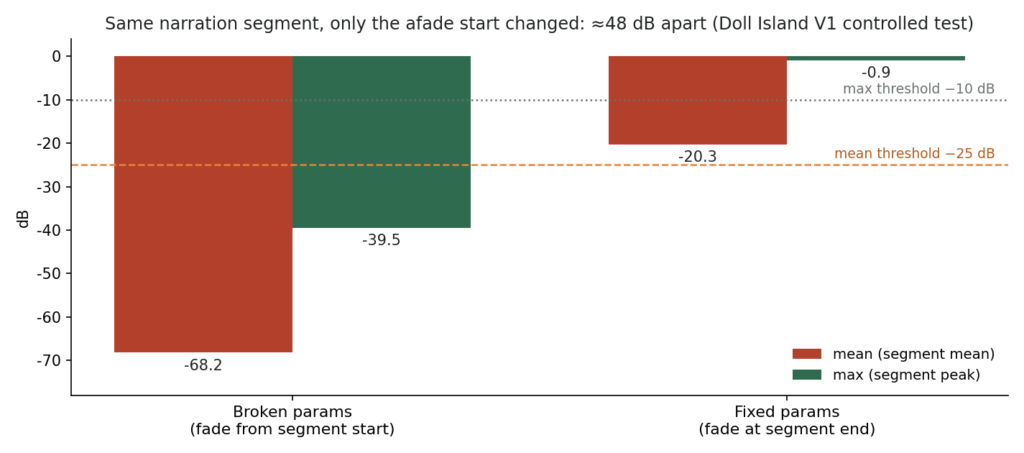
The full mix passed QA. The narration did not. Here is the repair record.