FACT-CHECK RECORD
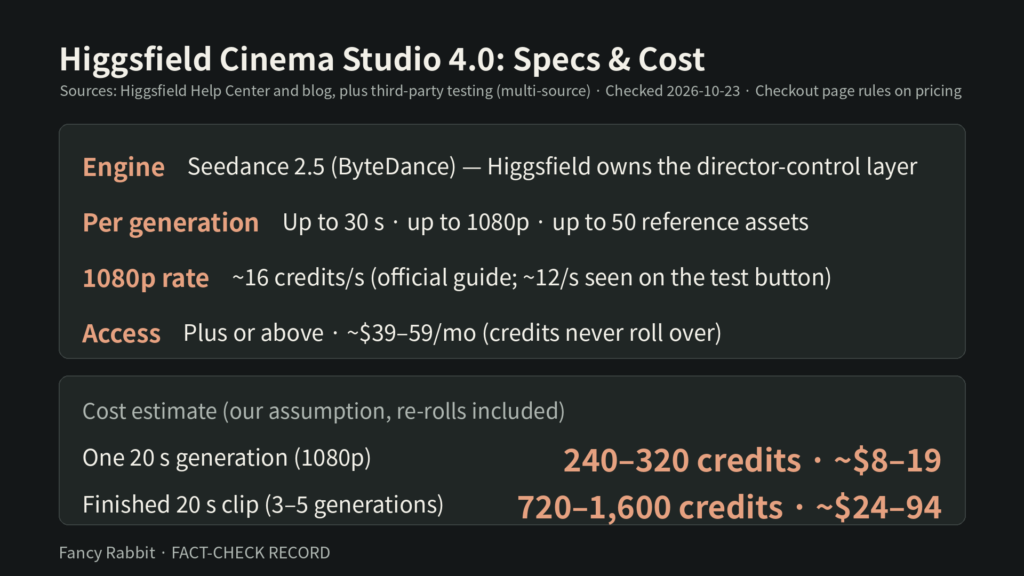
Higgsfield, Fact-Checked: How Was That One-Kernel Popcorn "Experiment" Actually Made?
The engine is Seedance 2.5, the showcase is a 1-in-64 survivor sample, and the terms allow training. We passed.

FACT-CHECK RECORD
The 100K stars are real. The price is your browser cookies — and why we did not install it.
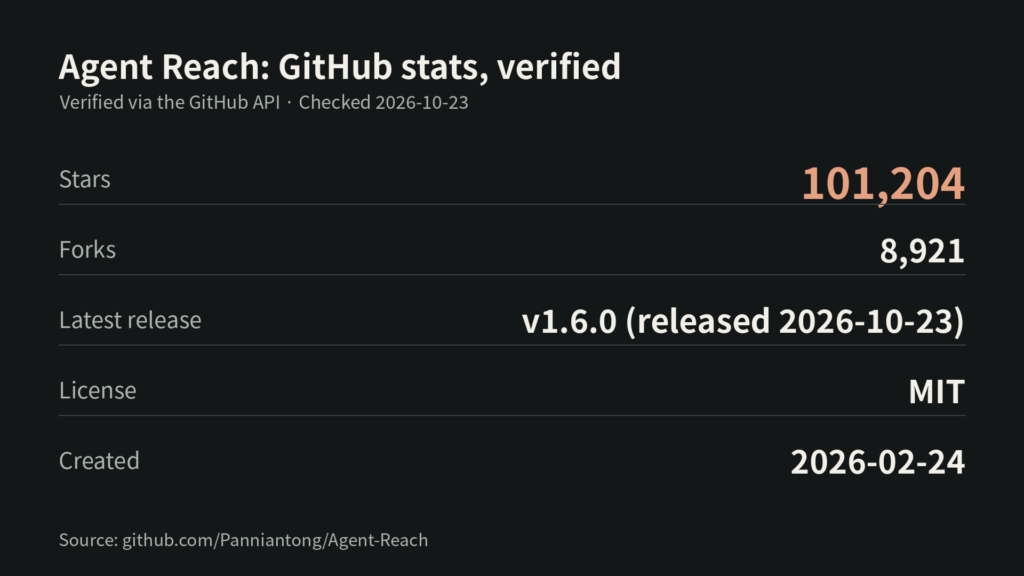
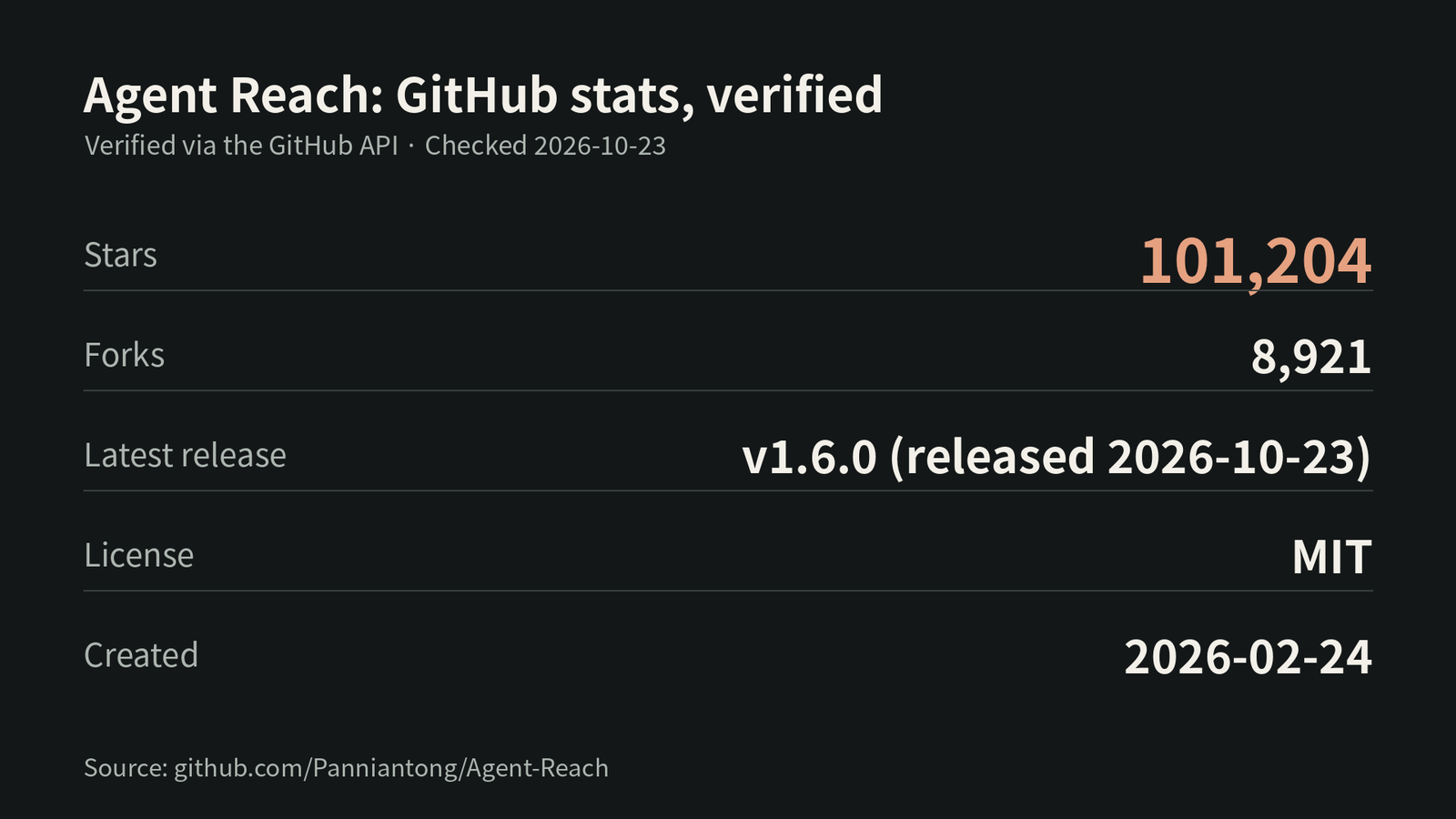
Agent Reach is a breakout open-source project on GitHub (101,204 stars on the day we checked). It gives an AI agent eyes across major platforms: channels that need no login work out of the box, and channels that do work by borrowing your browser’s logged-in state. Three findings. First, the stars are real, but the “one click, whole internet” impression needs a discount — the stable channels are mostly the no-login ones, social platforms are experimental-grade, and everything is read-only: it cannot post or interact. Second, its security model has one unavoidable point: on first use it copies your Chrome cookies for that site — effectively handing it your account keys. Its own documentation suggests using a burner account, and a user has already reported a platform ban warning after two days. Third, we decided not to install it: for Facebook, Instagram, and Threads we already have official connectors (safer), and its only real increment — read-only intel on Chinese platforms like Xiaohongshu — is not worth the account risk.
The short video (Facebook page “Andi Ge Zai Lian AI”, 2026-10-10) actually understated it: the real count is in the hundred-thousands, not thousands. But note the other side — the Reel is lead-generation content (comment a keyword to get the tutorial link; 174 comments). A high star count does not mean it belongs in your environment.
Two routes. Public content goes through existing command-line tools and reader services — clean and straightforward. Login-required platforms take the other route: OpenCLI drives a dedicated browser (the CloakBrowser stealth Chromium, falling back to your local Chrome), and on first use of a platform it copies that site’s login cookies from your Chrome. It does not read your password vault and does not log in for you — but a cookie is a login credential, and copying it means decrypting Chrome’s cookie store, a sensitive-permission class of operation.
Read-only removes the “rogue posting” risk; it does nothing about how platforms see you. The official README itself states that platforms may restrict accounts accessed through automation and recommends a burner account. There is evidence in the issue tracker: one user (issue #498, 2026-07-13, still open) received a Xiaohongshu ban warning after two days, screenshot attached; another issue notes that the private vulnerability reporting channel described in SECURITY.md is not actually enabled. The install method is itself a trust surface: the official tutorial is to paste an install.md link to your own AI agent and have it execute the instructions — you are authorizing an agent to run commands from a remote document, so supply-chain judgment is on you.
Yes, at a level the project itself warns about: the `agent-reach` package on PyPI is NOT this project (the name was squatted). On GitHub there are also EdisonChenAI/agent-reach (a 150-star derivative) and agent-reach-public/safe (a zero-login trimmed edition). Install from a random search result and you may well install the wrong thing — the genuine project is Panniantong/Agent-Reach.
If you do sentiment or competitor intelligence for the Chinese market and can prepare a fully isolated environment with disposable accounts, opening only the no-login channels plus Xiaohongshu read-only, it is a sharp tool. We have recorded exactly those preconditions (isolated environment + burner account + limited channels) for any future re-evaluation. Until then: watch, don’t install.
Note: for namesake disambiguation, see the “Any namesake traps?” section above.
My verdict: do not install — watchlist only. This is not a scam project: the stars are real, and the read-only, throttled design is comparatively restrained. The problem is singular: its login channels need copies of your browser cookies — account-key material — and the best its own docs can offer is “use a burner account”. With official connectors already covering Facebook, Instagram and Threads for us, the extra read-only intel on Chinese platforms is not worth the account risk.
An open-source GitHub project (Panniantong/Agent-Reach) that lets AI agents read content across platforms: no-login channels directly, login channels via the user’s browser cookies — read-only throughout.
It does not read your password vault, it only reads, and it throttles itself. But first use copies your browser cookies (login credentials by another name), its own docs concede that platforms may restrict automated-access accounts and recommend burner accounts, and a ban warning has already been reported. The risk sits with your accounts, not the code.
No. This is a desk-research report: on 2026-10-23 we decided not to install it. Nothing was downloaded or executed, and no account credentials were entered anywhere.
Every week, Fancy Rabbit fact-checks one heavily promoted AI tool: official documents and traceable evidence only, ad claims checked line by line, and an honest note when we neither subscribed nor trialed something — and why. Subscribe to the Fancy Rabbit notes and the next report lands in your inbox.
Reviews, pricing, and hands-on notes for each tool — including where the ad claims and the actual terms diverge — are kept current at DC Affiliate.
From tool selection and account governance to workflow design, this approach is available as a done-for-you or advisory service at David Chen Studio.
FACT-CHECK RECORD
The engine is Seedance 2.5, the showcase is a 1-in-64 survivor sample, and the terms allow training. We passed.
FACT-CHECK RECORD
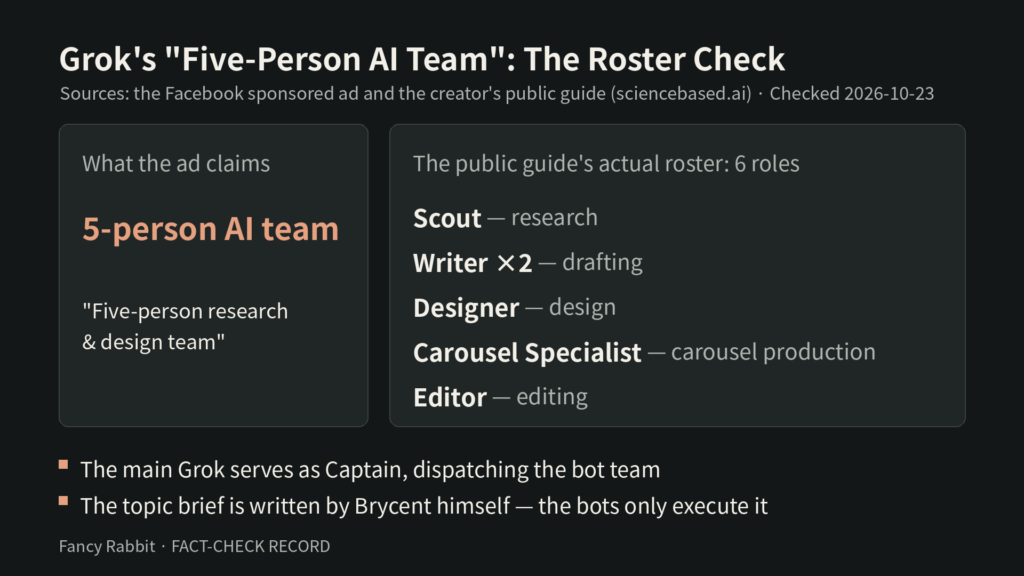
The ad says five-person team; the guide lists six roles, human-written briefs, and a paid publisher. We passed.